

Why is shopping for jeans so hard? If I had a dollar for every time I’ve heard that question…
And the frustrating part is, it doesn’t really get easier with age or experience. If anything, it gets harder. As our bodies change and our personal style evolves, the confidence we once had about what “works” can start to waver in these midlife years. Suddenly, finding jeans that fit well, look good, feel comfortable, and actually make you feel confident feels like an impossible ask.


It doesn’t seem like too much to expect. But judging by the number of emails in my inbox bemoaning this exact topic, apparently it is.
So what’s actually going on here?
It’s Not You, It’s the System
Before we talk about how to make shopping for jeans easier, it helps to understand why it feels so hard in the first place. A lot of the frustration comes down to how denim is designed, labeled, and marketed—and none of it is as straightforward as it should be.
Sizing Is Not Standardized
A “size 8” or “29” means very little across brands. Vanity sizing is very much a thing, and every brand sizes their denim differently. Even within the same brand, different styles can fit completely differently.
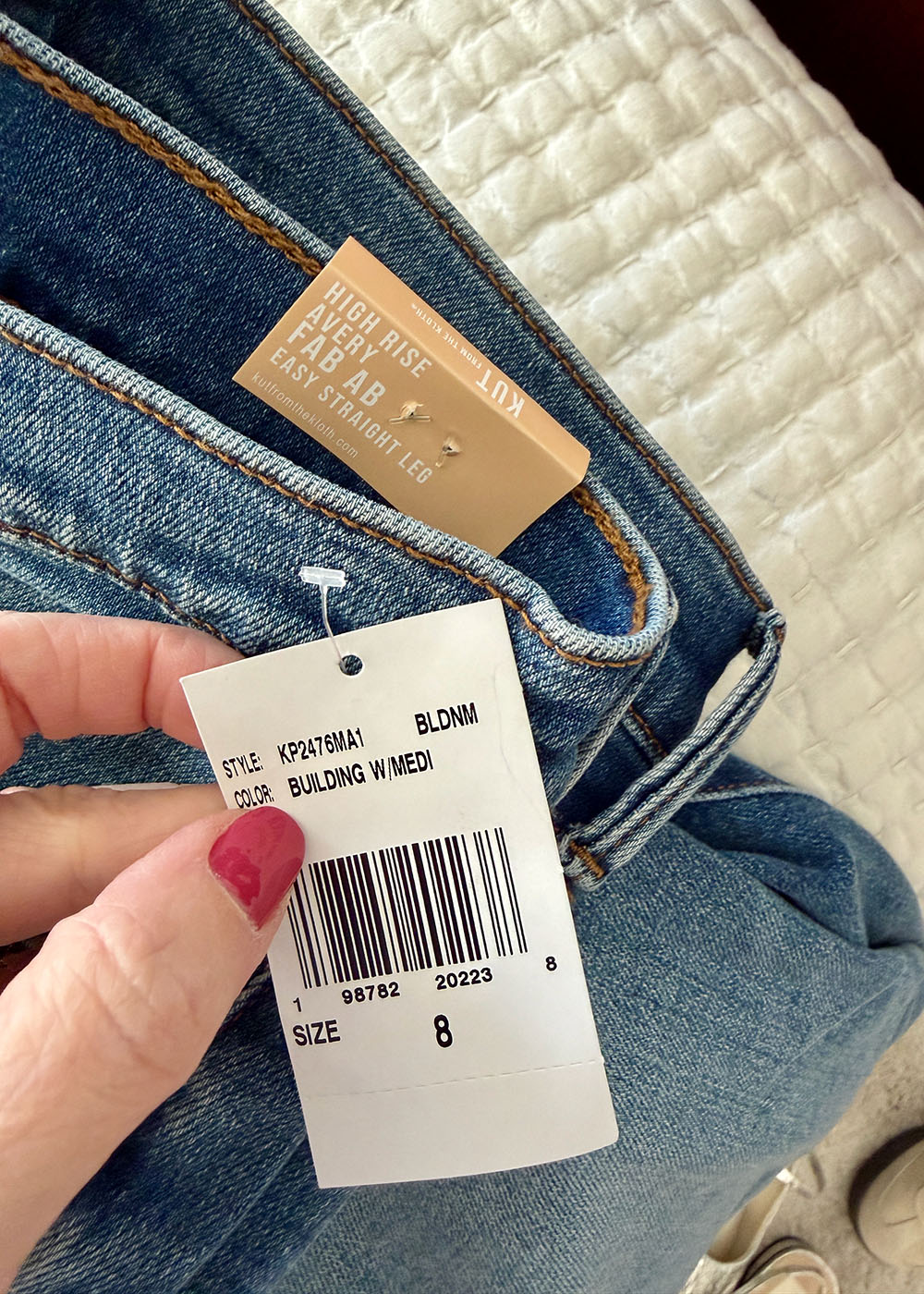
For that matter, even within the same style and wash, jeans can fit differently. That is because denim is cut in batches, which means the pair on the bottom of the stack may fit differently than the one on top. If you’ve ever tried on two pairs of the exact same jeans in the same size and wondered if you were losing your mind… you weren’t.
The takeaway here is this: The number on the tag is just a starting point.

You Can’t Rely on Denim Labels
Knowing what rise or inseam you prefer is helpful, but you can’t rely on the labels alone. “High rise” can mean 10″ in one brand and 12″ in another. A “straight leg” might skim the calf or puddle on the ground. “Cropped” could hit below the ankle bone or land mid-shin.
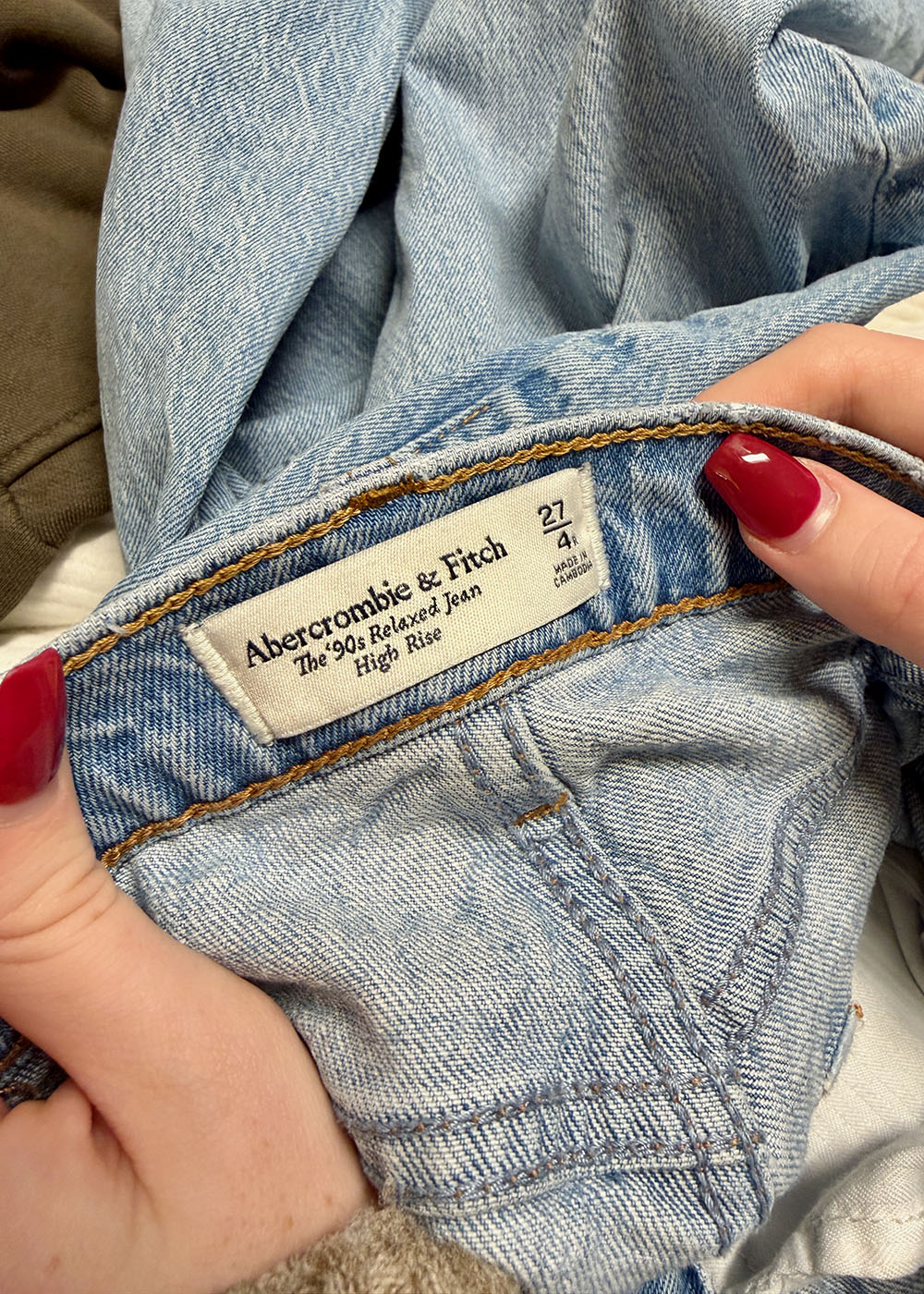
What actually matters are the measurements. Knowing your preferred front rise, inseam, and even leg opening makes a huge difference. (I’ve been known to stick a tape measure in my purse when I’m headed to the mall.)
That said, even measurements aren’t foolproof. With online shopping, not every website lists them—and when they do, they aren’t always accurate.
Confused by terms like “wide leg,” “cropped,” or “bootcut”? I covered all the major pant and jean silhouettes (and how they’re meant to fit) in my post: Women’s Pant Styles & Hem Lengths Demystified. It’s super helpful if you’re unsure what terms actually mean.
You also can’t assume consistency in style names. Some jeans labeled wide leg look more like a straight. Others called flare barely flare at all. There’s no industry-wide standard for these terms, so you really have to look at how the jeans actually fit and drape.
And if the model isn’t anywhere near your size or height, the photos can be seriously deceiving.
Takeaway: Labels are marketing—measurements and fit matter more.
Brands Use Different Fit Models
This is one many women don’t realize—and it explains so much. Every brand has a fit model, which is an actual woman (or sometimes several, especially if the brand offers a range of sizing such as regular, petite, tall, and plus). The brand designs its jeans to fit that specific body.
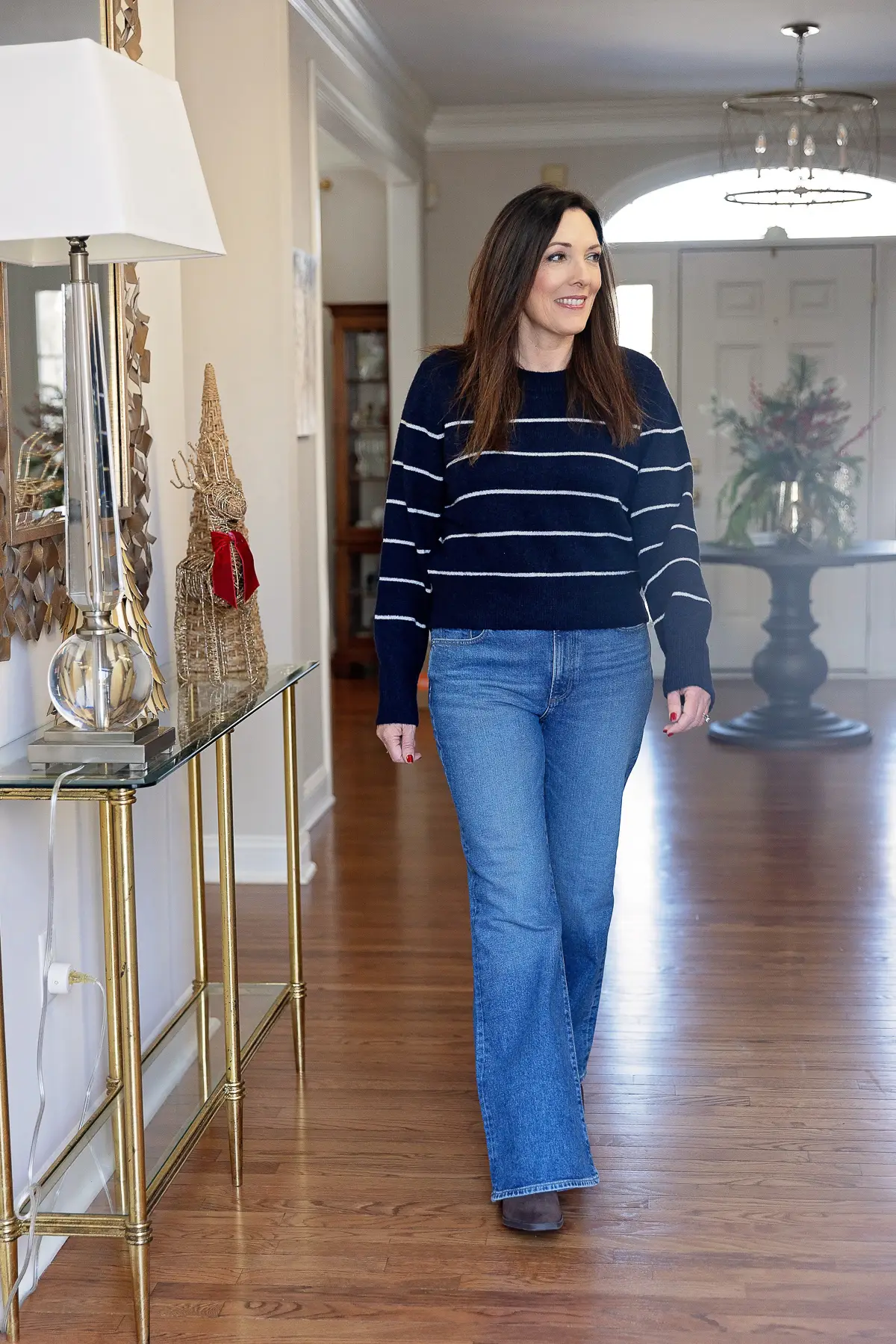
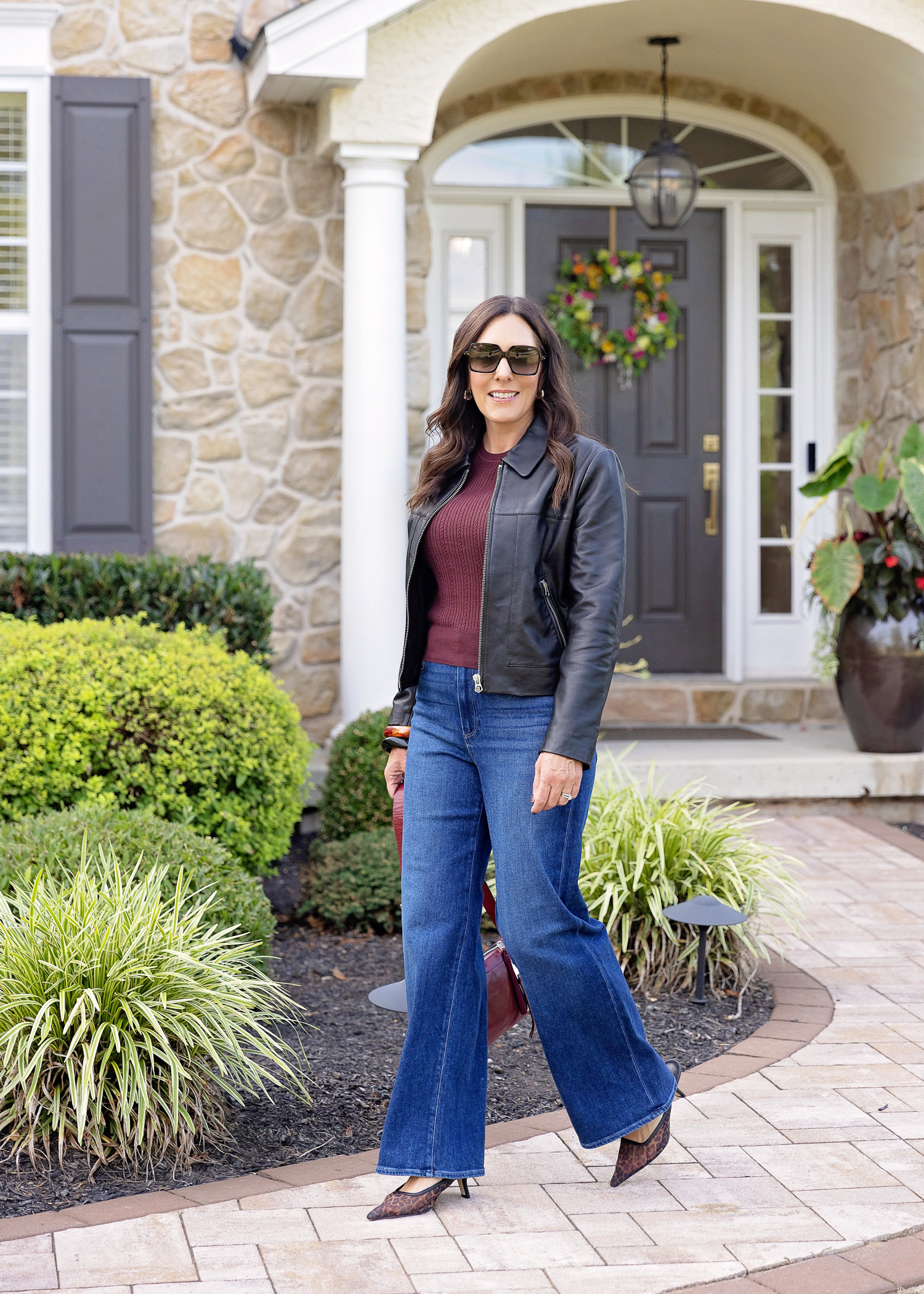
PAIGE Sophia Bootcut (30) // similar sweater // Dolce Vita Faint H20 (8.5)
That’s why some brands are cut for straighter bodies, while others allow more room through the hips and thighs. Some assume a longer torso or a higher rise; others work better for shorter rises or different proportions.
It may seem repetitive that I feature many of the same brands over and over, but after years of trial and error, I’ve learned which ones consistently work for me. Sticking with those few brands makes shopping easier—and, over time, makes building a wardrobe and putting outfits together feel far less frustrating.
Takeaway: Finding the brands that work best for your body isn’t limiting—it’s smart.
Fabrication Changes Everything
This is another huge factor that’s easy to overlook. Historically, denim was 100% cotton and fairly rigid. It took time to break in, but it softened and molded to your body with wear. That’s one reason vintage Levi’s 501s are still such a hot commodity at resale shops—even among higher-end shoppers.
Rigid denim tends to hold its shape better over time, but it’s also less forgiving and can feel stiff and uncomfortable if you’re not used to it.
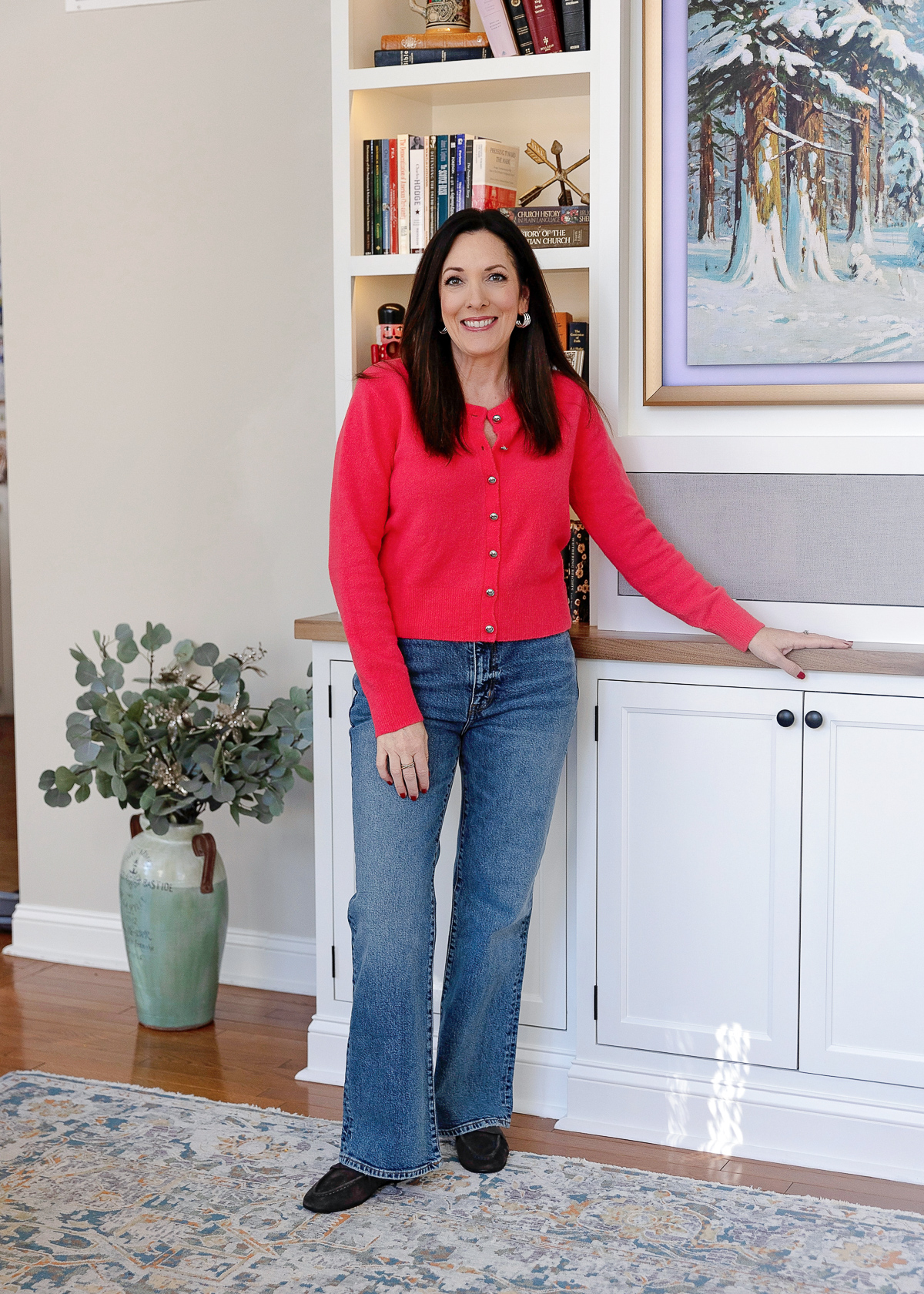
FRAME Pixie Arrow (29) // EVEREVE Marilyn Cardigan (M) // Black Suede Studio Gabby Loafers (39)
Today, most jeans are made with some amount of stretch. That makes them much more comfortable right away, but it also makes fit and quality a lot less predictable.
Stretch denim can feel great at first, but cheaper fabrications are more likely to bag out, lose their shape, and show every lump and bump. They also tend not to last as long, which is frustrating when you’ve finally found a pair you like.
Fabrication affects everything from the weight of the denim to how well it holds its shape and recovers (or doesn’t) over time. Finding the right balance between comfort, structure, price, and quality is tricky, and it’s a big reason why jean shopping can feel so hit or miss.
Takeaway: Comfort and structure are a trade-off. Knowing which you prefer makes shopping easier.
Why Even “Good” Jeans Stop Working
We’ve all had that pair—the ones we thought we’d never get tired of. For me, it was the AG Legging Ankle Jeans with the ripped knees and raw hem. Oh, how I loved those. 😆 More recently, it was the MOTHER Weekender—at one point, I owned them in four different washes.
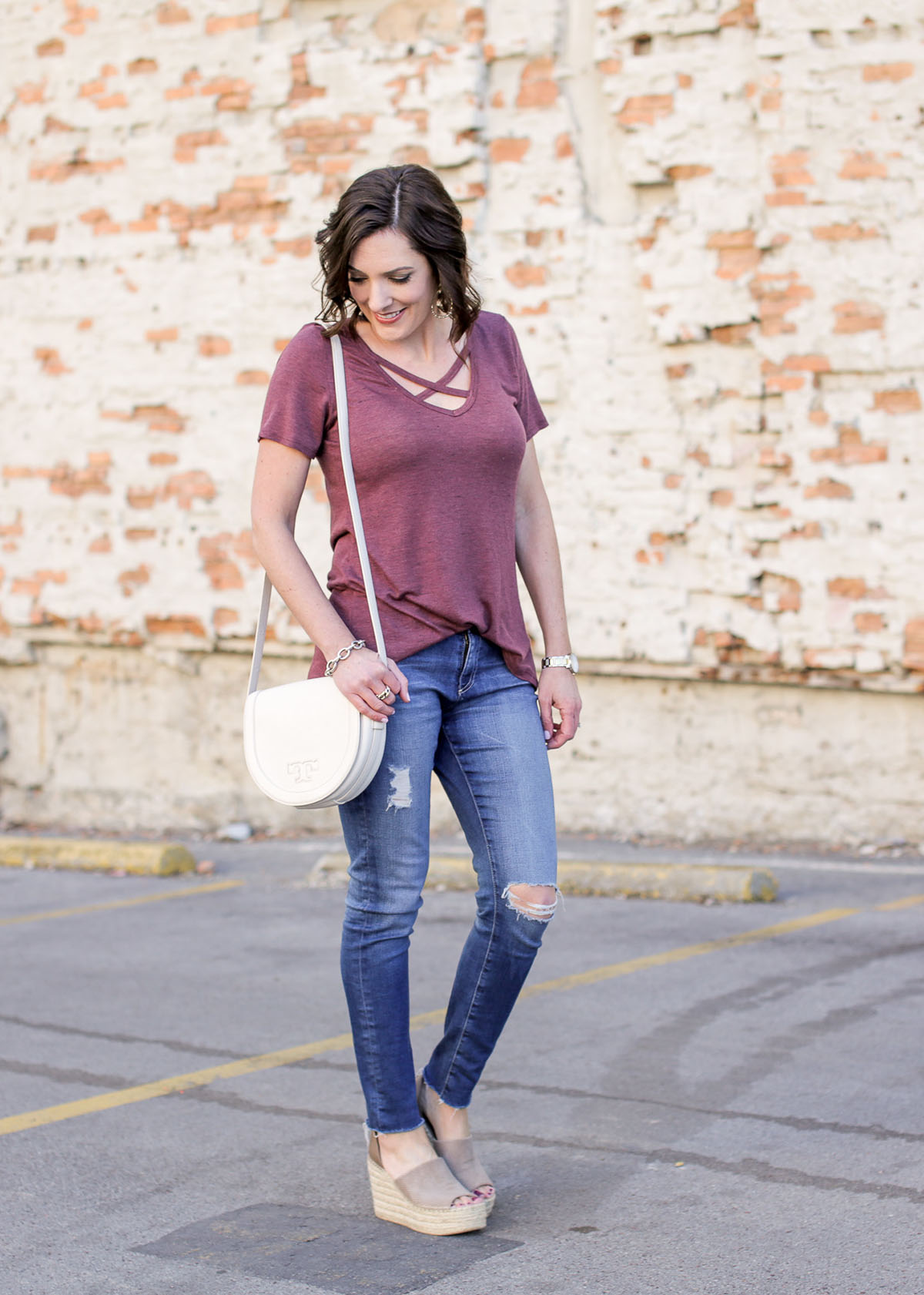
AG Legging Ankle Jeans circa 2017
But eventually, even the “good” jeans stop working. Trends change, and they don’t look quite right anymore. Or our bodies change, and they don’t feel as good as they once did. Then it’s back to the drawing board.
Bodies Change (Even When Size Doesn’t… Although, It Usually Does)
Even women who are fortunate enough to stay in the same size over time may find that the styles or brands that once worked for them no longer do.
And for the rest of us, simply sizing up (or down) isn’t always the solution either. Often, those old favorites just don’t fit or feel the same way they used to.
Trends Change the Fit Game
And then there are ever-evolving trends! The trend cycle is moving faster than ever these days, which can make shopping for jeans feel like trying to hit a moving target.
Rise heights shift. Leg shapes change. What once felt current can start to feel dated surprisingly quickly—even if the jeans technically still “fit.”
So what’s a woman supposed to do?
Fortunately, there are ways to make jean shopping easier and a lot less frustrating. Let’s talk about what actually helps.
How to Make Shopping for Jeans Easier
Trying different brands, fits, and styles, taking photos, and paying attention to what works and what doesn’t is quite literally my job. Because I wear jeans so often, I’ve spent years absorbing expert denim advice and putting it into practice, analyzing why certain pairs work and others don’t, and figuring out how to cut down on the frustration that comes with trial and error.
Don’t get me wrong, finding great jeans still takes some effort. But with the right approach, you can dramatically reduce the number of sizes, styles, and brands you need to try before finding a pair that really works.
1. Know Your Numbers
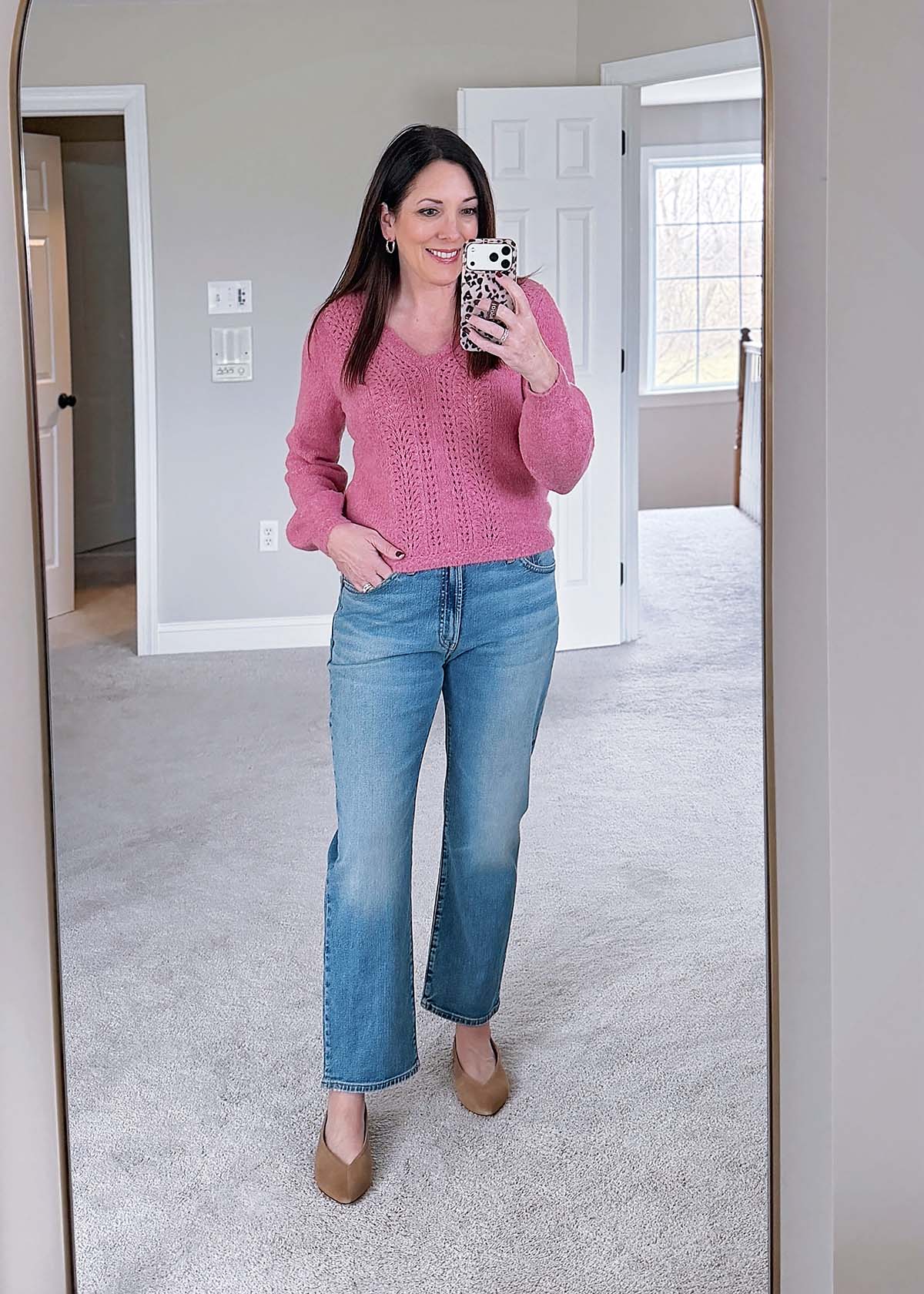
Madewell The Jules Slim-Straight Jeans (30) // Treasure & Bond sweater (S) // Veronica Beard flats (8.5)
If you don’t already know your ideal rise range, preferred inseam length, and how your waist compares to your hips, this is the place to start.
Pull out a couple of your favorite pairs of jeans and take some measurements—front rise and inseam are the most important. Keep notes on your phone or computer so you know what you’re looking for when you shop. As you try on different styles, you can continue refining these numbers until you really dial in what works best for you. This alone can go a long way toward narrowing down your options.
For a deeper dive on denim measurements (rise, inseam, and leg opening) and fabric composition, check out my post How to Shop for Jeans Online: Denim Measurements & Fabric Composition. It’s especially helpful if you do a lot of online shopping.
If you want to go even further, learning more about your body type can be incredibly helpful. Programs like Adore Your Wardrobe or the Everyday Style School Style Circle can help you understand why certain jeans work for you—and why others never quite do.
The more clearly you understand your own proportions, the less guesswork there is—and the fewer random pairs you’ll end up trying (and returning).
2. Shop Brands That Work for Your Body (or Find Some That Do)

MOTHER Roller (29) // old WHBM sweater vest (option) // Dolce Vita sandals (8)
Not every brand is for every body—and that’s okay. The goal is simply to figure out the ones that work best for you. Here are a few simple ways to do that:
Pay attention to patterns.
Notice what consistently works (and what doesn’t). If it helps, keep notes: brand, style name, rise, inseam, and fabric, etc. This way, you don’t have to rely on memory alone.
Stop forcing brands that constantly disappoint you.
If a brand rarely works for your body, it’s okay to let it go. And if you don’t yet have tried-and-true brands, be intentional about trying a few new-to-you ones—even styles or brands you may have dismissed in the past. Casting a wider net at first can be helpful; once you start to see what works, you can narrow things down from there.
Once you find what works, repeat it.
If a particular style fits you well, don’t hesitate to buy it in other washes. Especially if you’re hard to fit, buying multiples can make a lot of sense, as long as the cost per wear works for you.
That said, if your outfits are starting to feel repetitive, take a look at what you’re repeating. If you have five pairs of nearly identical dark-wash straight-leg jeans, it might be time to branch out into a different wash or silhouette for variety.
One more thing to consider: cost per wear.
I know spending three figures on jeans can feel uncomfortable, especially if you’ve been burned before, but it’s worth thinking about the trade-off. In many cases, one or two $150 pairs that fit beautifully will get far more wear (and cause far less frustration) than a closet full of $30 jeans that never quite feel right.
3. Choose Jeans Designed for Your Proportions
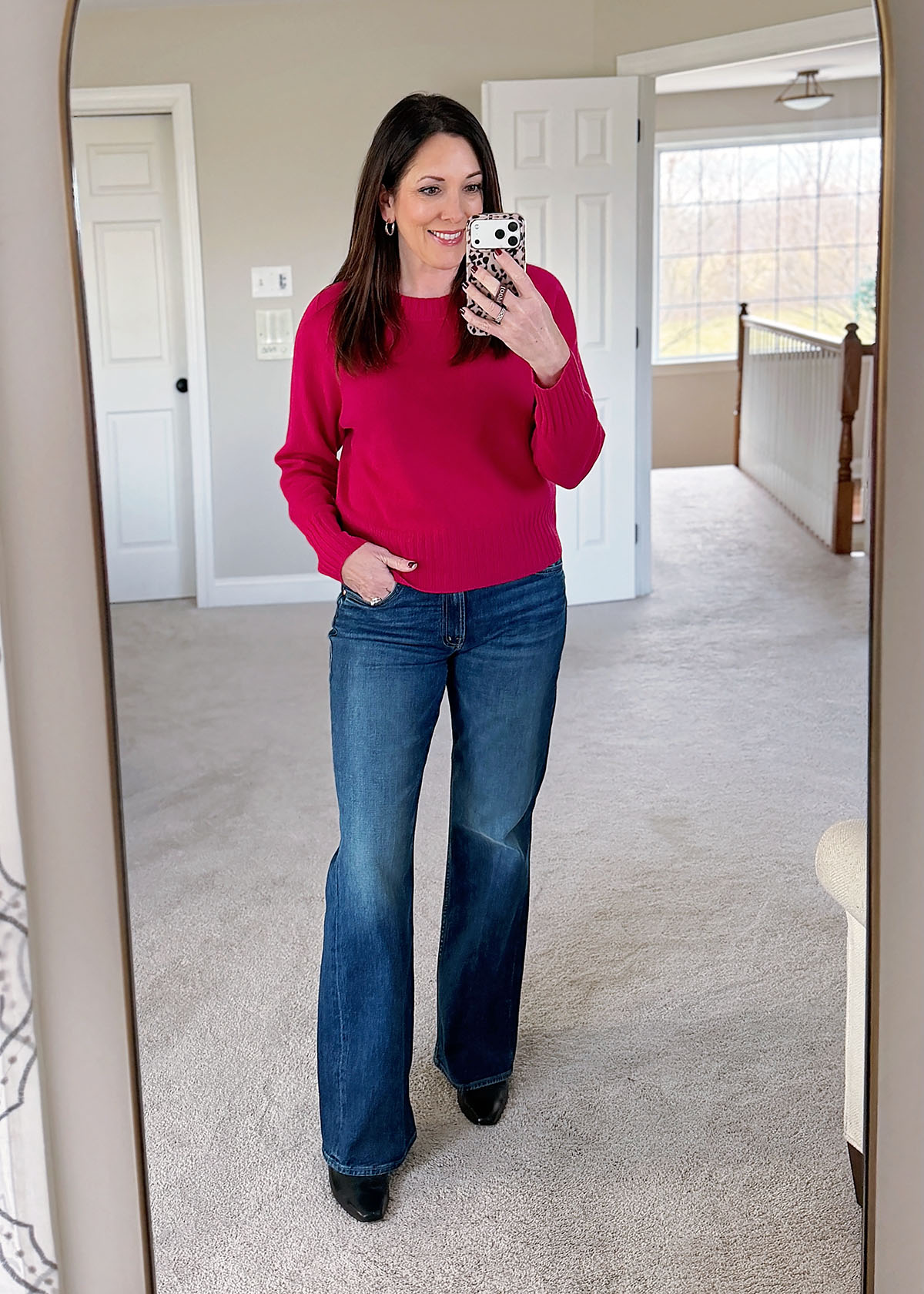
MOTHER Bookie Sneak (29) // Naadam sweater (S) // similar boots
One of the easiest ways to make jean shopping less frustrating is to start with denim that’s actually designed for your body type.
If you have a smaller waist compared to your hips or thighs, look for curvy-fit jeans. These are cut with more room through the hips and a more contoured waistband, which helps prevent gaping at the back. If you’ve ever had jeans fit everywhere except the waist, this can be a game changer.
Brands like Madewell, Abercrombie, and LOFT all offer curvy-fit jeans, while some brands—such as Good American—build their denim lines with curvier proportions in mind from the start.
The same idea applies to petite denim. Many brands, including Madewell, LOFT, and J.Crew, offer petite (and tall) sizing, while retailers like Nordstrom carry jeans in multiple inseam lengths—often a better starting point than hemming regular styles.
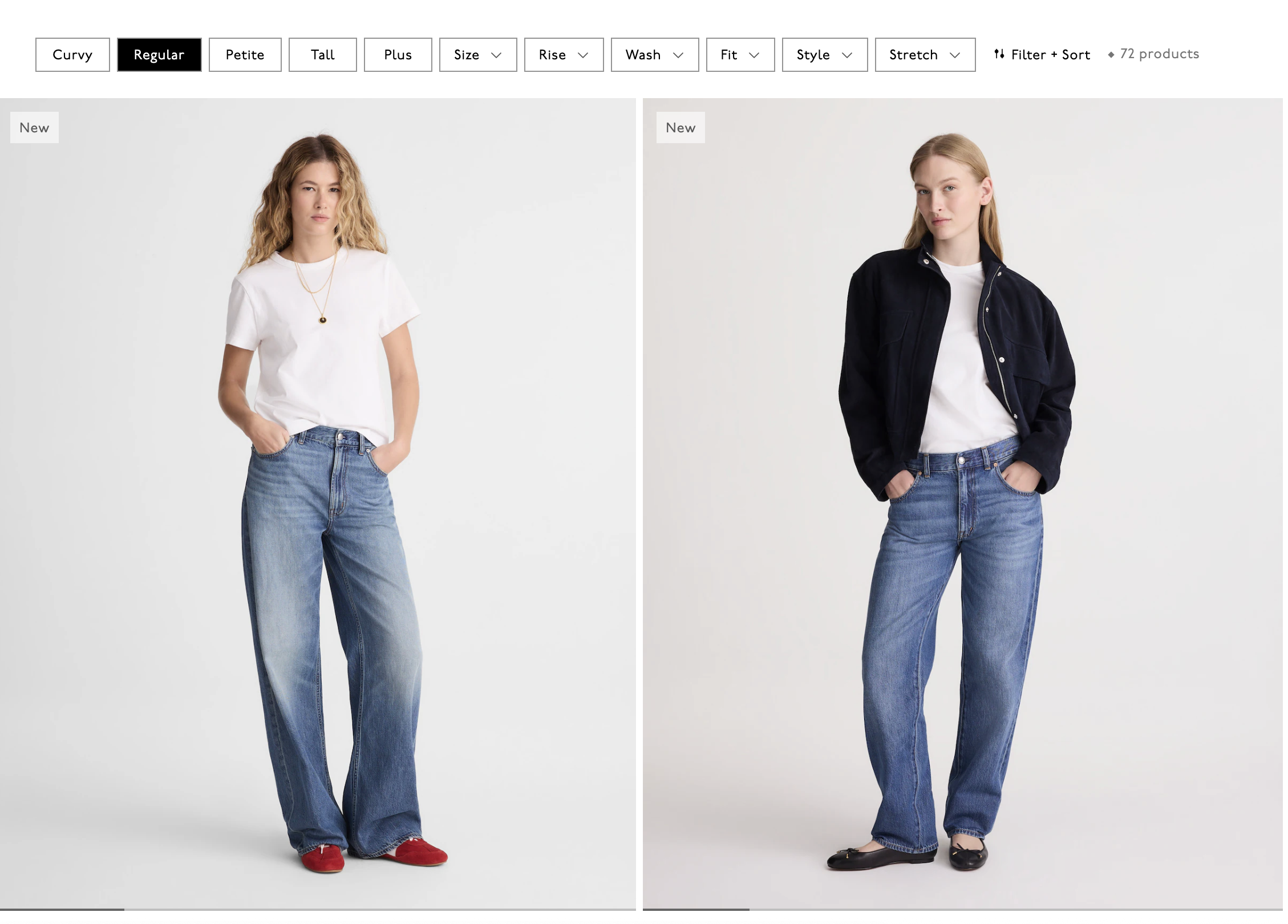
Premium denim brands like MOTHER and FRAME have also introduced petite options (MOTHER’s Lil styles and FRAME’s Pixie fit).
And here’s another little insider tip: Sometimes petite jeans work beautifully even if you’re not technically petite. I am 5’5″, and I’ll occasionally buy the petite version so I can wear them with flats without hemming.
This applies to tall sizing as well. Starting with denim made for your proportions usually means fewer alterations, better overall fit, and far less trial and error.
Takeaway: The closer you start to your actual proportions, the easier the rest of the process becomes.
4. Order Two Sizes
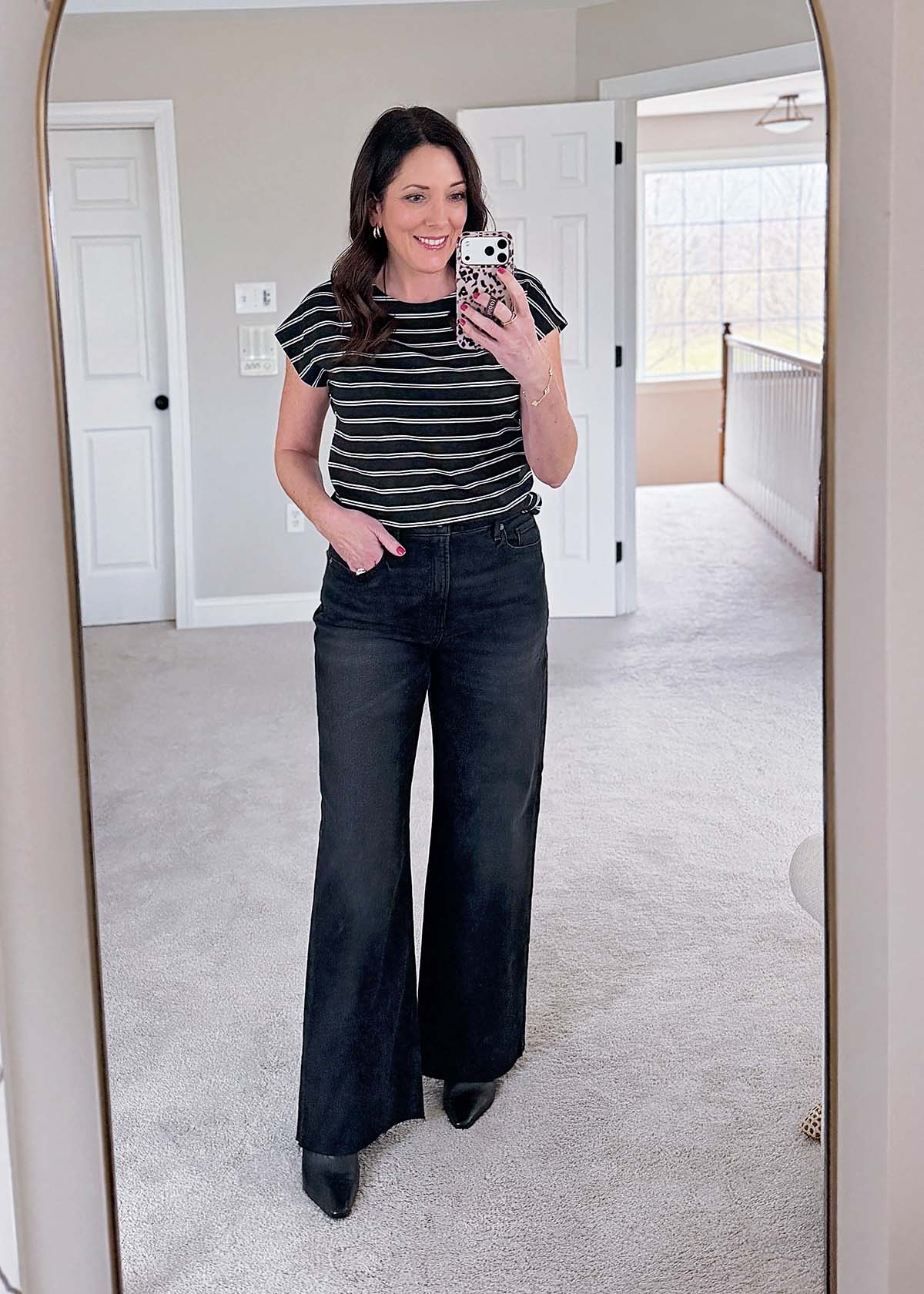
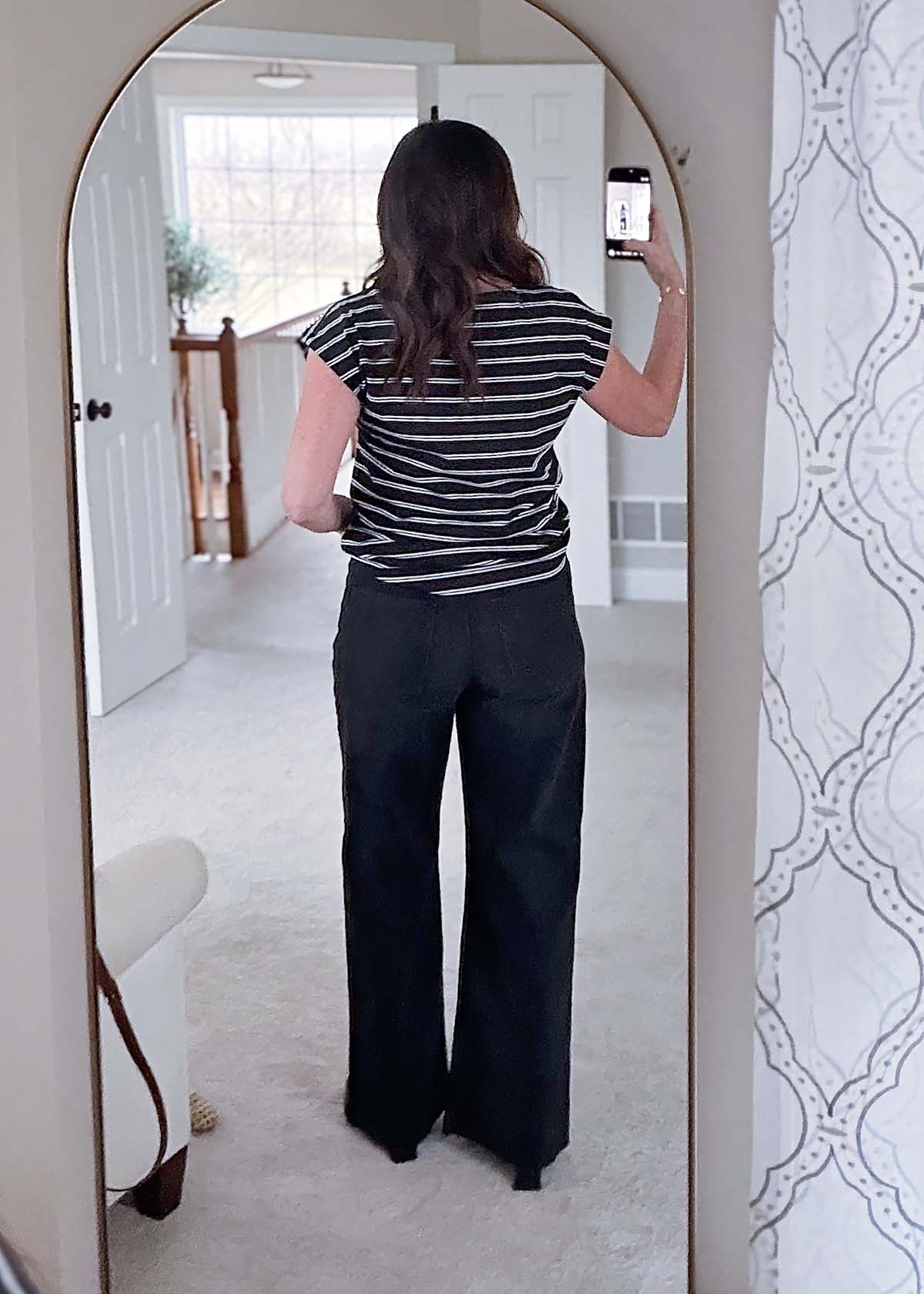
LOFT Rivete Wide Leg (30) // LOFT Stripe Tee (S) // Sam Edelman Saige Bootie (8.5)
When in doubt, order two sizes and return the one that doesn’t work.
I’m very much between sizes right now, so I do this almost every time I buy jeans—even from tried-and-true brands, and I’m usually glad I did.
Even if you try on a pair and think it fits, take the time to try the other size too.
I’ve been surprised more times than I can count that the first pair I tried on (and thought I liked) wasn’t actually the better fit.
5. Understand Stretch vs Structure
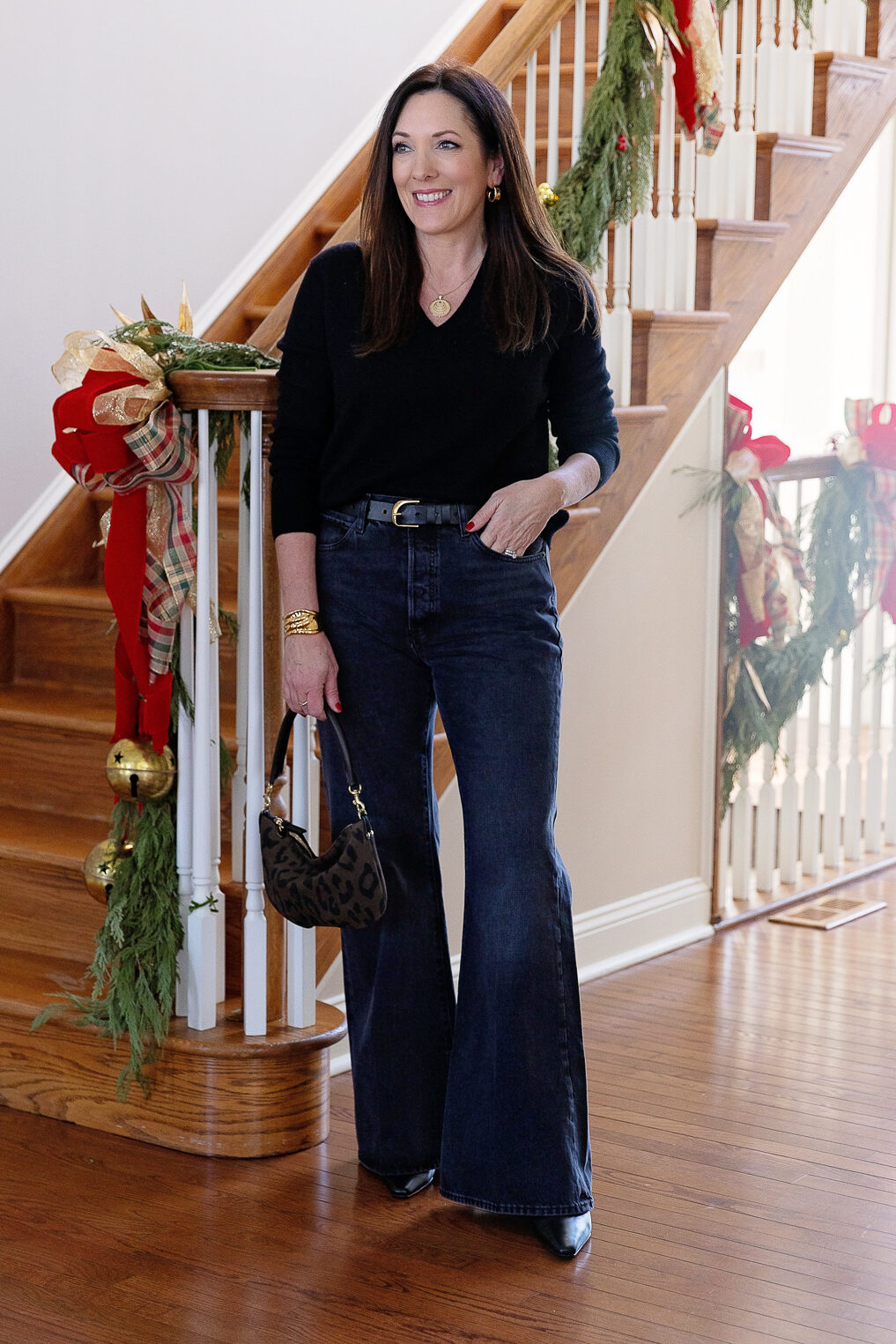
FRAME The Lax (30) // Jenni Kayne Flynn (S) // Sam Edelman Saige Bootie (8.5) // FRAME belt (M) // leopard bag // gold cuff // gold pendant
Not all denim behaves the same way, and a lot of the frustration with jeans comes down to this. Some pairs feel great the minute you put them on… and then lose their shape an hour later. Others feel a little stiff at first but look better and better the longer you wear them. And then there are those unicorn jeans that feel good right off the rack and only get better with time.
More structure (rigid or low-stretch denim):
Holds its shape better and wears well over time, but may feel less forgiving at first.
More stretch:
Feels comfortable right away, but can bag out, lose its shape, or start to feel sloppy by the end of the day—especially in lower-quality fabrications.
There’s no right or wrong here. It’s mostly a matter of personal preference—but once you understand this and figure out which you prefer, you can eliminate a lot of frustrating returns.
Some women like to have a mix of both in their closet, and that’s completely fine, too.
- Running errands or sitting all day? A bit of stretch can be your friend.
- Long days, travel, or outfits that need to look polished for hours? More structure usually works better.
This is also why one “perfect” pair of jeans doesn’t exist. Different days call for different denim.
6. Actually Test the Fit (Not Just the First Impression)
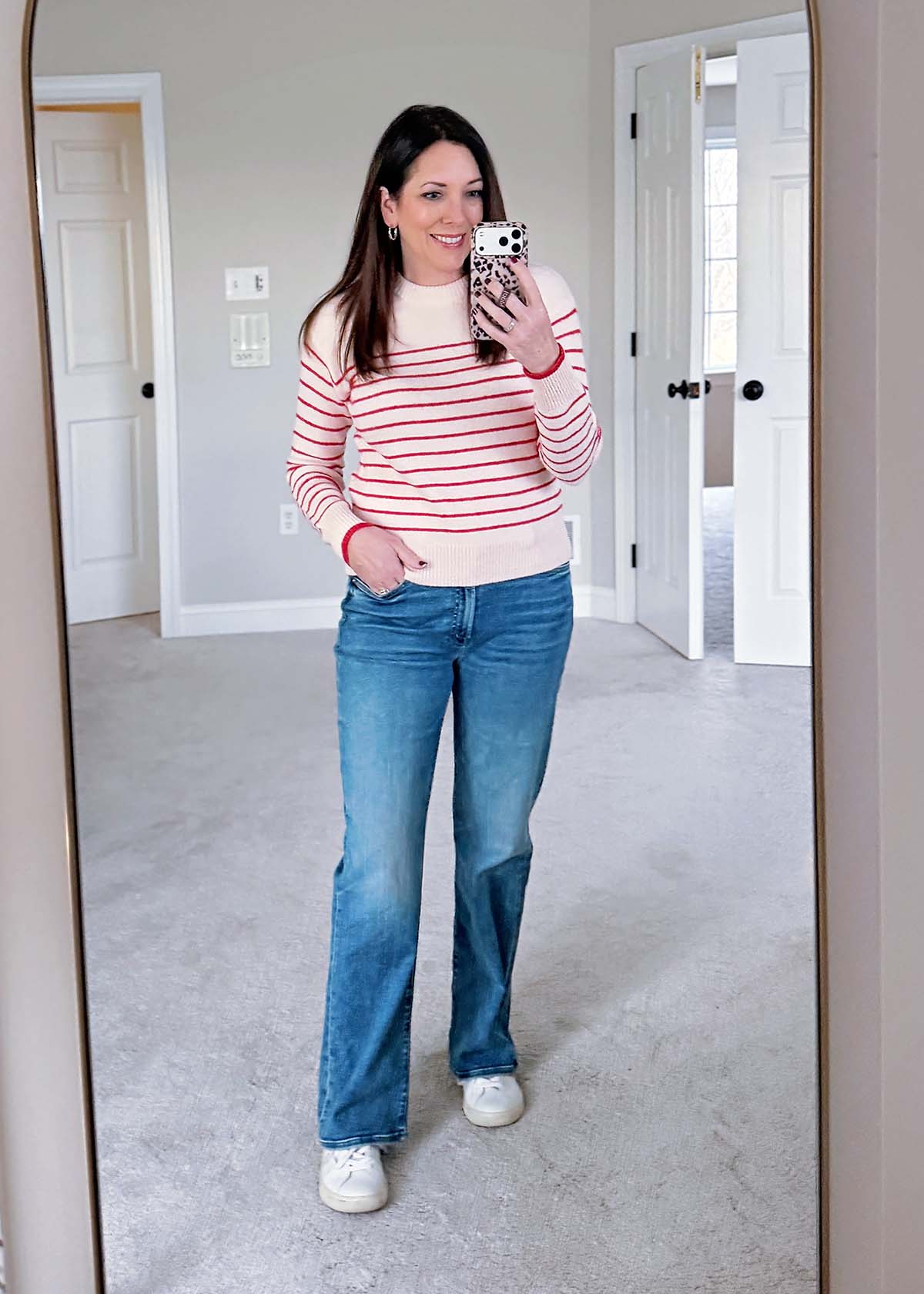
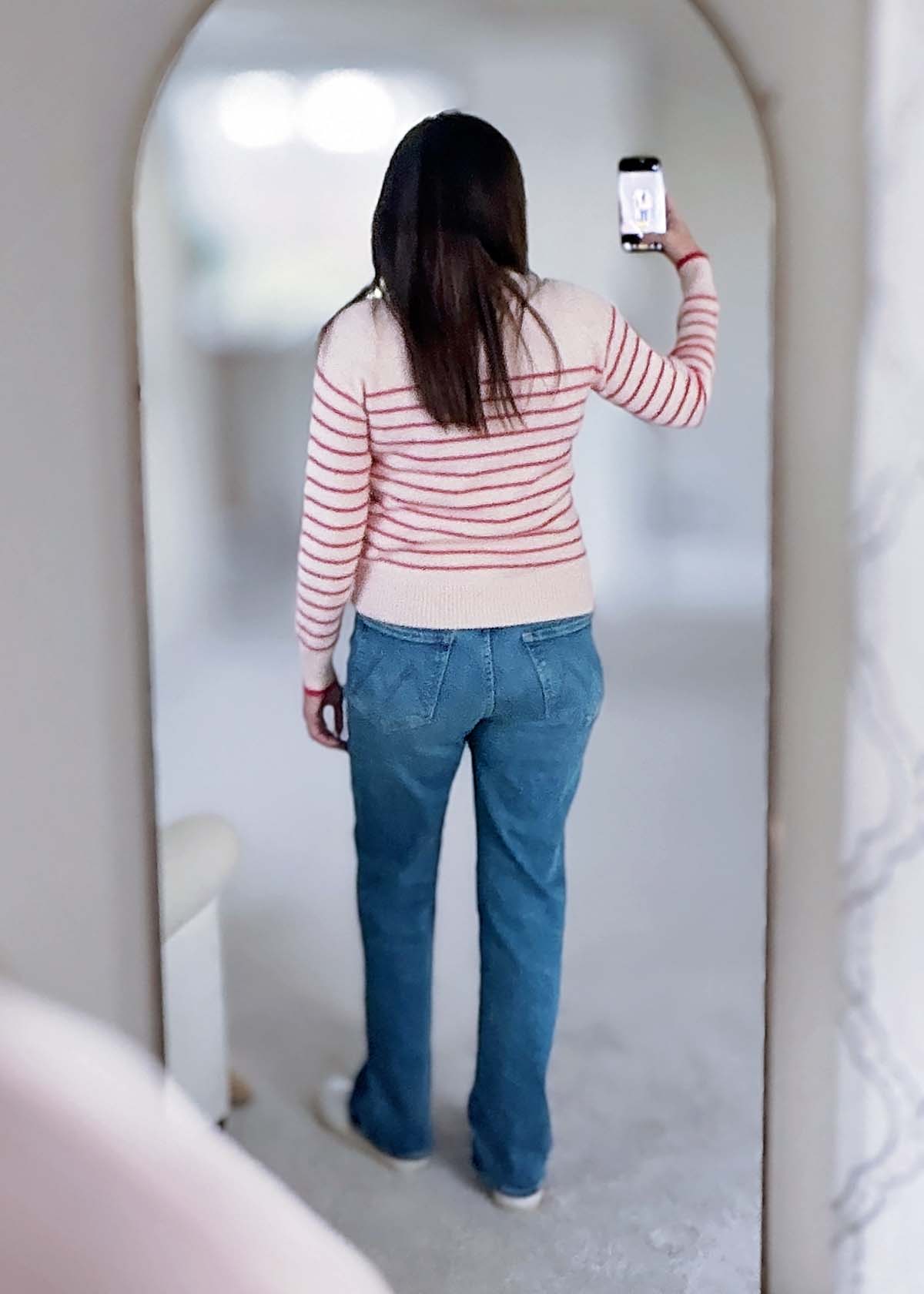
MOTHER Lil Kick It (30) // Caslon stripe sweater (S) // VEJA Esplar (39)
Once your jeans arrive, don’t rely on a quick try-on in front of the mirror. Denim changes once you move around, and first impressions can be misleading.
Wear them around the house for an hour or two with the tags still on.
Sit, stand, walk, and move the way you normally would. This is often the only way to know whether they’re truly comfortable—and whether they’ll stretch out or lose their shape over time. Just be sure to follow the retailer’s return guidelines and keep the tags attached while you test the fit.
Try them on with the shoes you’ll actually wear.
Heel height, bulk, and toe shape all affect how the jeans look. A pair that looks “off” barefoot may look perfect with the right shoes. Some styles work great with sneakers but not with boots (or vice versa), so it’s important to know which denim/shoe combinations really work for you. And even if they work, consider if that is what your closet actually needs.
Style them the way you’d really wear them.
Throw on the tops and layers you’d pair with these jeans. If they technically fit but don’t work with the clothes already in your closet, you’re unlikely to reach for them.
Take photos—and don’t skip the rear view.
Trust me on this one. Take mirror selfies from all angles, especially the rear view. What looks fine in the mirror doesn’t always look the same in photos, and comparing images side by side can bring a lot of clarity—especially when you’re deciding between sizes or styles.
Remember: returns are part of the process, not a failure.
If a pair passes all of these tests, it’s probably a keeper. If not, back they go—and that’s success, not failure. This is why I try to shop at retailers that offer free returns, but even when they don’t, I’m sometimes willing to pay the return fee for the convenience of trying jeans on at home.
7. Don’t Make Alterations a Last Resort
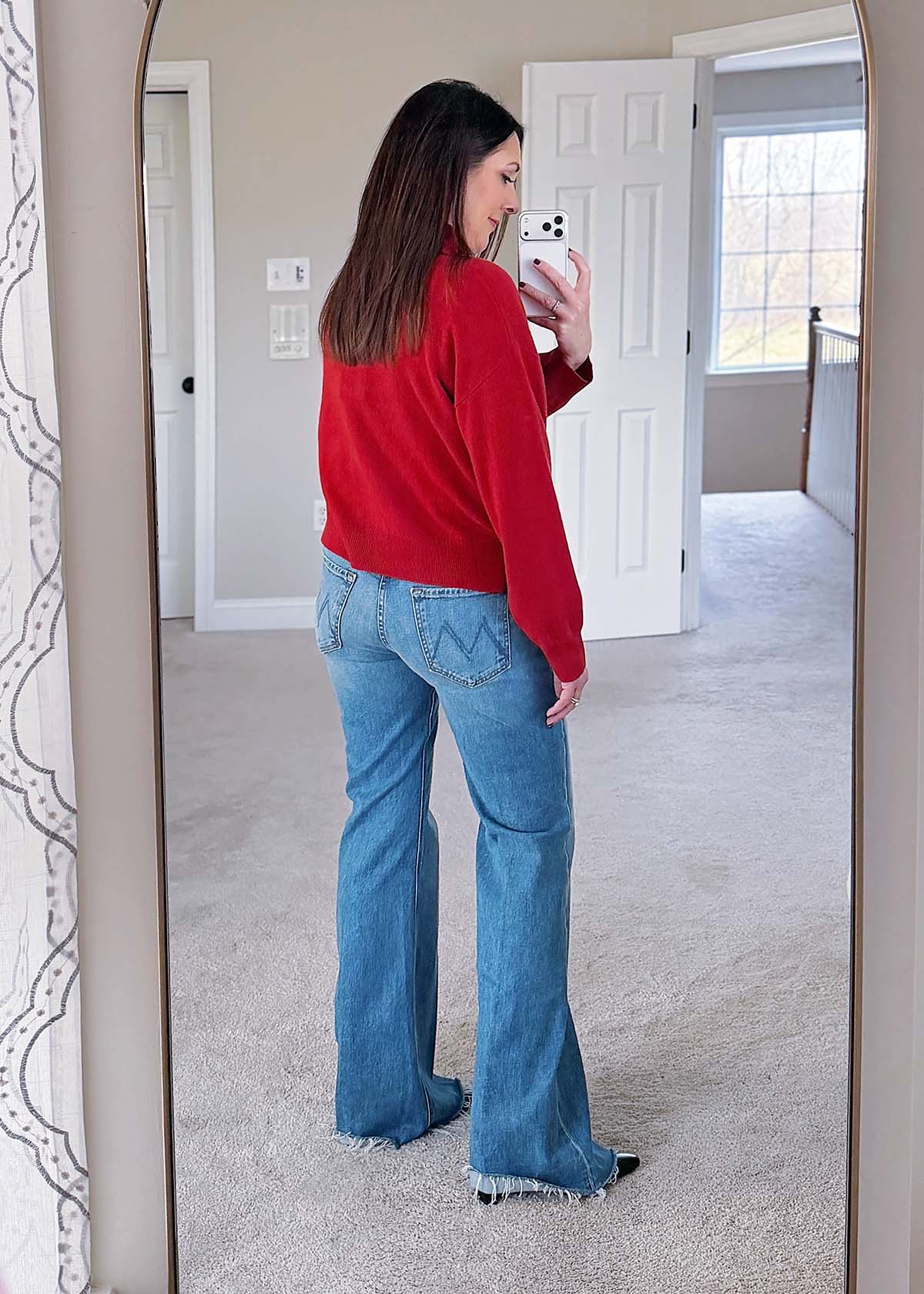
MOTHER The Doozy Fray (30) // Naadam turtleneck c/o (M) // Sam Edelman Saige Bootie (8.5)
For many women, alterations feel like admitting defeat—but they’re often what turns a just-okay pair of jeans into truly great ones.
Hemming is incredibly common, especially with today’s longer inseams, and it usually doesn’t cost much. It’s well worth it to have jeans that fit your body properly and work with the shoes you actually wear.
In fact, this applies to most clothing, not just jeans.
One of the best style “secrets” is the value of having a relationship with a good tailor—or purchasing from a retailer like Nordstrom, which has an excellent alterations department if you’re lucky enough to have a store nearby. I use mine all the time.
If the rise, leg shape, and overall fit are good, a simple alteration can make all the difference. The key is knowing when it’s worth it. A $10–$20 hem on a pair of jeans you love and will wear for years is usually money well spent. Alterations won’t fix everything, but they can absolutely be worth it for the right pair.
One important thing to keep in mind, though: taking too much length off a pair of jeans can change the way the leg is meant to hang.
Cutting several inches from a straight, flare, or wide-leg style can throw off the proportions—even if the hem itself is well done. That’s also why petite women are often better off starting with petite denim or shorter length options, where the rise, knee break, and leg shape are designed for a shorter frame. So many retailers offer multiple length options now, and it’s definitely the way to go if you’re not an average height.
Pro tip: Always ask the tailor to retain the original hem. If they don’t know what that means, take them somewhere else.
Small waist or hip tweaks are also far more common than most people realize. If your jeans are consistently too big in the waist, this is often an easy fix—and one that can dramatically improve how they fit and feel.
8. Stop Chasing the “Perfect Pair”
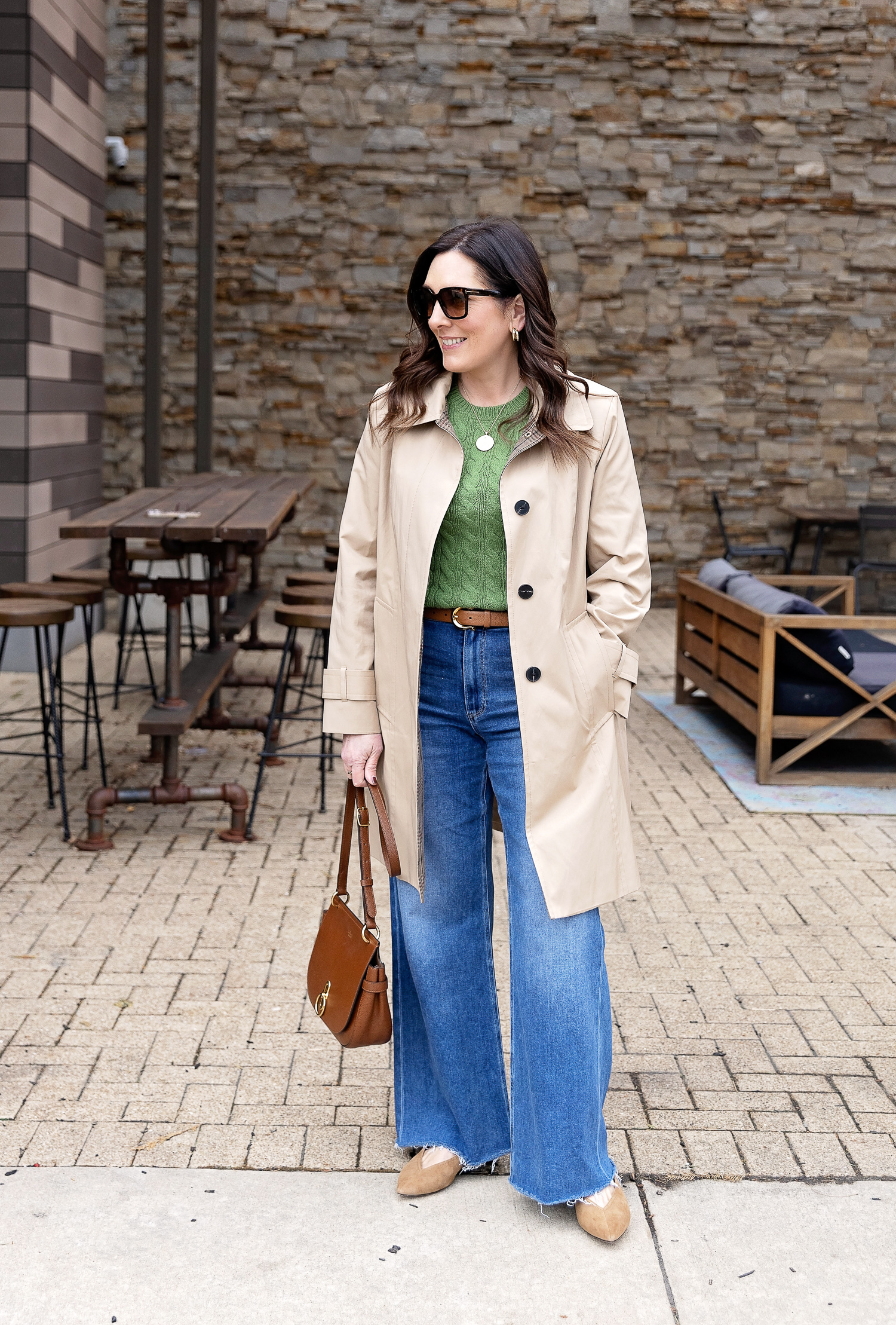
PAIGE Anessa (30) // London Fog trench (S) // Vince Cable Knit Sweater (S) // Veronica Beard flats (8.5) // similar belt // Mulberry bag (option) // Tom Ford Sunnies (option) // Jenny Bird earrings // Jane Win pendant
Finally, I think it is important to clarify that the idea that there’s one perfect pair of jeans out there—one that works for every outfit, every day, every occasion—sets us up for frustration from the start.
Different days call for different denim. A comfy pair for errands. A more structured pair for long days or travel. Something polished for dinner or events. You may also need more than one length, depending on the shoes you plan to wear. When you stop expecting one pair to do it all, shopping for jeans becomes much less stressful.
The goal isn’t perfection. It’s to have a small rotation of great jeans that make getting dressed easier—and make you feel good when you put them on. Once you understand how jeans work, and learn what works best for you, you can shop smarter, with less frustration and a lot more confidence.
Stay In Touch
If you liked this post, be sure you’re signed up for my email newsletter. In addition to my most recent blog posts, you’ll receive exclusive newsletter content like special sales, my newest favorite finds, and an occasional peek behind the scenes — all delivered right to your inbox.
I would also love for you to join my JLS Fashion Insiders Facebook Group! This is a friendly place to discuss all matters of fashion and style with other women, share your outfits, get advice, and stay up to date on all the happenings in our community.


39 Responses
I so needed this! I’m about to give up on jeans. We can wear them to the office, and in the winter, it’s nice with a sweater, however, sitting in jeans is uncomfortable. I have found very few pairs that don’t cut into my waist. So that’s one aspect that I wish was listed in the measurements. The rise does make a difference, and us shorter torso gals are glad for mid-rises making a comeback, but the rise and waist together are what seem to determine comfort for sitting. Or am I just being unrealistic to want to sit comfortably in jeans?
That was so much great information! Thank you!
I once took a pair of jean I love, but were a little to long, to a tailor. I didn’t know about the “original hem” and when I got them back I hated them. The fading around the original hem and the seams was one of the things I really liked about the jeans. Fortunately they were still long enough that I could rip that hem out and cut them to a nice length to wear with sandals. Live and learn.
Ooof. That’s a bummer. She should have asked you.
Great article! I’ve always wondered why if I try on two pairs of the same jeans in the same size that they fit differently! I’m not crazy after all! LOL
My biggest frustration has always been that most jeans seem to use a model that has a very flat butt. I have a long rise, very straight hips, but a rounded butt. I have short legs and arms but broader shoulders and really don’t fit well into petite sizing. Frustrating to say the least.
I’m 71. Can you recommend jeans that have more stretch in the waistline? For example, I have a pair of NYDJ skinny jeans, Alina, that are a size 10. I’m now a size 12/14. However, the waist is still comfortable although sadly my waistline is probably 3-4 inches larger. I have several pair of NYDJ – Barbara, Marilyn and others. I’ve examined the waistlines but can’t figure it out, unless the company used stretch thread. I really want jeans that are as soft and comfortable, but polished looking, as my yoga pants. I took the ADORE YOUR WARDROBE class in 2020 and I’m a pear. I like the boot cut silhouette on me.
Nordstrom’s carries the Wit and Wisdom brand that has a wide stretch waistband that I find very comfortable. Democracy is also the same and sold elsewhere. BTW I also took Adore Your Wardrobe in 2020.
Sooooo well done! As a fellow denim gal I pay VERY close attention to measurements, second only to seeing the style(photo). When a retailer has confusing info I go straight to the brand site where I believe the information is a bit more reliable. I also appreciate the stretch meter that a few use (mother, JCrew, Madewell) that helps me “see” what I can expect to experience IRL. Nordstrom videos are a strong source for this too.
Overall, there’s a few brands I’m drawn to because I “know” they work for me. I always do the sit stand for a few hours test. This has all but eliminated buying a mistake pair.
Thanks for sharing all of this, I know it’ll be very informative and helpful to so many!
Wonderful post, thank you! I really liked the last point: different jeans for different days over a one perfect pair mentality. Sooooo true!
What types of denim styles would form a good working denim wardrobe? Or is it more individual based on lifestyle? I wonder what pair you’d wear on travel days.
It’s really so individual. I travel in stretchier jeans, like Mother, Kut from the Kloth, and Paige.
Another great post!! The “sit and stand around the house” test as well as “looking in the mirror at all angles” are both soooo important! Yesterday I wore a new pair of Sanctuary ecru patch pocket jeans that I’d bought at the end of summer but hadn’t worn. I met someone for breakfast and then ended up at Nordstrom to do a return which led me to the dressing room to try on a couple things. When I saw my rear view in their 3-way mirror I was so distraught! First I was wearing the wrong undies and I had horrible panty lines, but worse still was that the jeans were terribly see-through and not as flattering as I’d thought they were. Couldn’t wait to get home and change! They immediately went in the donate pile. Great info here!
Heather……Soma make great invisible line panties with tummy hold too. I wear year round. They have good sales so I try to stock up then.
Oh thank you! Will look for them!
Thank you for all of these great tips. I really need some new jeans and have been dragging my feet on ordering. I am 5′ 2″ tall, long waisted, and have a bit of an apple shape. My challenge is finding jeans that fit my larger waist, straight hips, and flat butt and that don’t slide down every time I stand up! Wish me luck!
Fantastic pointers Jolynne thank you! You are always so thorough in your explanations, it is so helpful!
Good Advice! I loved Kut from the Kloth jeans the minute I slipped into them. I ordered online in 2P and got the Amy which was a cropped style in the fall on clearance. They were inexpensive and I was just seeing what my size would be in that brand. The 2P was perfect and I wore the next summer alot. I can tell alot by hanging jeans back up at the waist on like skirt hangers. They look neat and structured if good jeans and can wear a few times without washing so not washing them to death fast. NYDJ is another good one I tried in OP since you size down. I got the Sheri slim rolled cuffed ones because I loved that look. J Jill is pretty consistent in sizing and Talbots too but I size down to 0P in Talbots. BR I have OP & 2P in the closet right now and different cuts so sometimes inches decrease in size in summer and in winter we increase or else style of jeans accounts for things. One is mid rise and one high rise. It difficult sometimes and my Democracy jeans I love in itty bitty bootcut got hemmed by tailor because too long and wasn’t wearing 3.5 inch heels all day. I take my boots with me to tailor. So much to think about but your tips helped!!!
Great post!!
Thank you for all the information.
Really great post. I wear petite and it’s sometimes a struggle for sure. My husband bought me a pair of Frame pixie fit for Christmas and they fit perfectly. Maybe that’s the pair for me. You always look great in every pair!
Thank you for this post! I really appreciate the time and effort you put in to get this helpful information available for us.
Fantastic posts. I especially liked the same jeans in the same size may fit differently!! This is a lesson I learned the hard way….now I always try jeans on before the tags come off.
Thank you for all of your hard work!
Thank you for all this great information! If only you could go jean shopping with us!
Great article! You gave so much excellent information.
You had a ring that your mother gave to you for your birthday that I loved. Could you share the information where she purchased it?
Thank you!
Sure, it’s this John Hardy Crossover Ring.
Great post. I can remember my first pair of skinny jeans I tried. It was a pair at GAP and I paid $60 which I thought was way over priced. lol I ended up loving them and for sure got my cost per wear. I think skinny jeans were so easy to buy, and pair with all the type shoes I wear and I love shoes and have many styles. It took me awhile to embrace the straight and wider leg denim but now I can’t go back to skinny….. BUT I’ll never say never. I like to stay current but also at age 64 I may not go back to skinny. You always look great in your denim choices. You have nailed it, even when you have said you’ve fought your changing body like the rest of us.
What brand is best to try if you have a large waist and tummy,
For starters, I would look for denim fabrics with a lot of stretch, so they will expand where you need them to without bagging out in other areas. Some brands make jeans with tummy control panels, like Wit & Wisdom and Spanx. Good American jeans also have a smoothing tummy panel, but I find their waistbands can be small since they’re made for curvy figures, but they might be worth a try.
I’m sure there are others, perhaps someone has other suggestions for you. Also, I would think a higher rise styles would be more comfortable, as it holds you in and doesn’t cut right across the widest part, but it depends on your body type and how high (or low) waisted you are. That’s where trial and error comes in. Good luck!
Great points & things to remember. I especially like the point about bodies changing. I have pretty much been the same size for the last 15-20 years but my clothes fit differently depending on season, exercise routine etc. I used to have such a hard time finding jeans that fit my waist & didn’t gap but curvy jeans have been so awesome. The last few months my curvy jeans have been TIGHT! Weight hasn’t changed & they fit every where else so I guess it’s just being redistributed? I guess I have to find new favorite jeans. ugh! Thanks for these tips!
This is so helpful as I have been struggling a lot with finding jeans that really work for a while now. I thought I was just a bad shopper, but this helps make sense of it all! Thanks for sharing your knowledge and expertise with us!
Good information. I find it so annoying that losing 5 pounds causes my jeans to get looser. It’s not a lot but on me it makes a difference.
FANTASTIC POST
Great info
This is a great post! Thanks for putting it together. I was a teen in the 80s and I could never ever squeeze myself into Guess jeans, which were all the rage at the time. I wish I’d had this info then 🙂
Mother jeans do not work for me at all, but Kut from the Kloth almost always do. I tried J. Crew jeans on a whim recently and they work for me, too, although I have to have them hemmed.
I appreciate you validating all my thoughts about jeans! You can try on multiple pairs, same style, same size and they will all fit differently depending on the day. I have some that are the ones I go to first. I’m petite so that limits my options. I will search because I love a good pair of jeans♥️
I’m 71. Can you recommend jeans that have more stretch in the waistline? For example, I have a pair of NYDJ skinny jeans, Alina, that are a size 10. I’m now a size 12/14. However, the waist is still comfortable although sadly my waistline is probably 3-4 inches larger. I have several pair of NYDJ – Barbara, Marilyn and others. I’ve examined the waistlines but can’t figure it out, unless the company used stretch thread. I really want jeans that are as soft and comfortable, but polished looking, as my yoga pants. I took the ADORE YOUR WARDROBE class in 2020 and I’m a pear. I like the boot cut silhouette on me.
Thank you for such details!! Wow!! So impressed by all the research and knowledge about the denim industry!!! You rock!
My favorite 2 pairs of denim right now is are Gap, one is a straight leg I’ve owned for several years and another is the flare 70s with patch pockets. I bought 2 pairs of those because they don’t make my rear look flat. And they’re so comfortable. I’ve had a ton of compliments. I’ll need to take your advice and write down the details of them.
I’d love a pair of premium denim tho. Taking the time to shop for them is on my to do list!
Stay warm, it’s bitter cold on the north coast of Ohio today!!
Such good information and will be helpful as I purchase new cropped versions of jeans for spring. I also use a tape measure to check the length of rise, inseam and waist when i shop. What’s frustrating is sometimes the inseam isn’t as advertised, for example 29.5 instead of 30″ inseam which makes a difference for me.
This post came at an interesting time. I bought the cutest Everlane cheeky jeans a year ago–but I bought a 29 and should of got the 30. They sat, hung up in my closet all this time. This week, I was determined to make them work–I love the length, how they make the butt look–everything–they are a “unicorn” jean. So….I googled ways to stretch the waist–and it worked! You soak the waist part in warm water for a bit and then stretch them over a wood hanger–end to end–you can also use a desk chair–pulling and draping them over the back. I used the wood hanger. Leave them that way for a couple of days or more. Then after they are dry–wear them almost every day for a week or so–do lunges and squats occasionally during the day. You can do the soak treatment twice–I did. It may all sound like a pain–but if you have a pair of jeans that you love but are not wearing–its worth it! I may go back and get another pair–but now I’m not sure of 29 or 30! Side note–I don’t remember seeing if Everlane jeans were ever mentioned here?
So, above, I was talking about the waist of the jeans being 29–also–the length on the Everlane cheeky jean is close to 29 inches–which is great for us in between petite and regular gals!
Very well explained